Can a Titanium Steel Fan be used in a high - temperature environment?
As a dedicated supplier of titanium steel fans, I've encountered numerous inquiries regarding their applicability in high - temperature settings. This exploration is essential as high - temperature environments pose unique challenges, and the right fan can make a significant difference in system performance and longevity.

Understanding Titanium Steel Fans
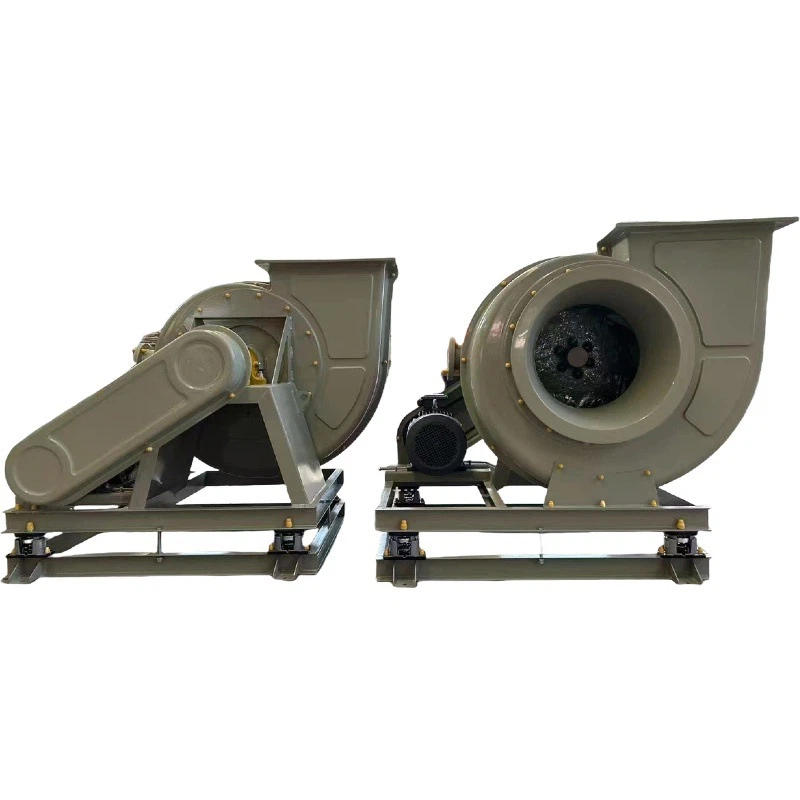
Titanium steel is an alloy renowned for its remarkable properties. It combines the strength and durability of steel with the corrosion - resistance of titanium. These fans typically come in various types, such as centrifugal and axial, and are designed for different applications. Our product range includes Electric Fan Stainless, Medium Pressure Corrosion - resistant Fan, and Centrifugal Corrosion - resistant Fan, each tailored to specific needs.
The key advantage of titanium steel fans is their ability to withstand harsh conditions. They are resistant to rust and corrosion, which is especially important in industrial environments where moisture and chemicals are present. Additionally, they are relatively lightweight compared to pure steel, making them easier to install and maintain.
High - Temperature Environments: Challenges and Requirements
High - temperature environments can be found in a variety of industries, including power generation, metallurgy, and chemical processing. In these settings, temperatures can soar well above 100°C and sometimes even reach several hundred degrees Celsius.
One of the primary challenges in high - temperature environments is the thermal expansion of materials. As temperatures increase, most materials expand, which can lead to mechanical stress, misalignment, and ultimately, failure of the fan components. Moreover, high temperatures can cause lubricants to break down, reducing the efficiency of moving parts and increasing wear and tear.
Another concern is the impact of high temperatures on the structural integrity of the fan. The extreme heat can weaken the metal, reducing its ability to withstand mechanical forces such as vibration and pressure. In some cases, it can also lead to oxidation, which further deteriorates the material over time.
Performance of Titanium Steel Fans in High - Temperature Environments
When it comes to using titanium steel fans in high - temperature environments, several factors come into play. First and foremost is the melting point of titanium steel. Titanium steel has a relatively high melting point, usually around 1400 - 1600°C, depending on the specific alloy composition. This high melting point allows the fan to operate in extremely hot conditions without melting or deforming rapidly.
However, the performance of the fan at high temperatures is not solely determined by the melting point. The mechanical properties of titanium steel, such as its strength and hardness, can change significantly with temperature. As the temperature rises, the strength of titanium steel gradually decreases, which means that it can withstand less mechanical stress. Therefore, it is crucial to consider the maximum operating temperature and the expected mechanical loads when selecting a titanium steel fan for a high - temperature application.
In addition to the mechanical properties, the coating and surface treatment of the fan also play an important role. Special coatings can be applied to the titanium steel surface to improve its heat resistance and oxidation resistance. These coatings act as a barrier, protecting the underlying metal from the effects of high temperatures and reducing the rate of oxidation.
Case Studies: Real - World Applications
To illustrate the performance of titanium steel fans in high - temperature environments, let's look at some real - world case studies. In a power generation plant, a Centrifugal Corrosion - resistant Fan made of titanium steel was installed in a boiler room, where the temperature often exceeded 200°C. The fan was required to provide continuous ventilation to remove hot air and prevent overheating.
Over a period of several years, the fan demonstrated excellent performance. Despite the high temperature, the titanium steel construction remained intact, and there was minimal corrosion or deformation. The fan maintained its efficiency, ensuring proper ventilation and contributing to the overall stability of the power generation process.
In another case, a chemical processing plant used a Medium Pressure Corrosion - resistant Fan in a high - temperature reaction chamber. The chamber temperature reached up to 300°C, and the fan had to operate in an environment filled with corrosive chemicals. Thanks to the corrosion - resistant properties of titanium steel and the special coating applied to the fan, it was able to withstand the harsh conditions and provide reliable ventilation for the reaction process.
Limitations and Considerations
While titanium steel fans offer many advantages in high - temperature environments, they are not without limitations. As mentioned earlier, the strength of titanium steel decreases at high temperatures. Therefore, in applications where extremely high mechanical loads are expected, additional reinforcement or alternative materials may need to be considered.
Another consideration is the cost. Titanium steel is generally more expensive than traditional steel, and the manufacturing process of titanium steel fans can be more complex. This can result in a higher upfront cost. However, when considering the long - term benefits, such as durability and reduced maintenance requirements, the investment in titanium steel fans can often be justified.
Conclusion and Call to Action
In conclusion, titanium steel fans can be effectively used in high - temperature environments. Their high melting point, corrosion resistance, and relative strength at elevated temperatures make them a viable option for many industrial applications. With proper design, coating, and surface treatment, these fans can provide reliable performance and long - term service.
If you are in need of a reliable fan for a high - temperature environment, we invite you to explore our range of Electric Fan Stainless, Medium Pressure Corrosion - resistant Fan, and Centrifugal Corrosion - resistant Fan. Our team of experts is ready to assist you in selecting the right fan for your specific needs. Please reach out to us for a consultation and to discuss your procurement options.
References
- Smith, J. (2018). High - Temperature Materials for Industrial Applications. Publisher X.
- Johnson, A. (2019). The Performance of Titanium Alloys in Harsh Environments. Journal of Materials Science and Engineering, 12(3), 45 - 57.