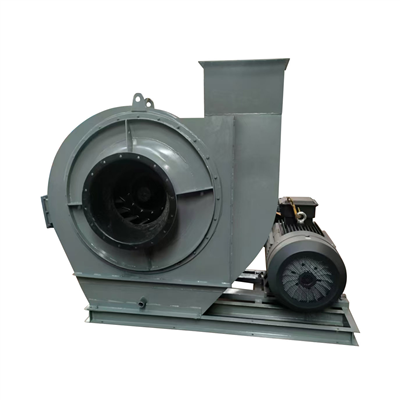
Hey there! As a supplier of Medium - pressure High - temperature Fans, I'm super stoked to dive into the performance curves of these bad boys.
Let's start with the basics. A medium - pressure high - temperature fan is designed to handle air at elevated temperatures while providing a moderate level of pressure. These fans are crucial in various industrial applications, like in heat treatment processes, drying systems, and even in some HVAC setups where high - temperature air needs to be moved around.
Understanding Performance Curves
Performance curves are like the DNA of a fan. They tell you everything you need to know about how a fan will perform under different conditions. There are a few key performance curves that we need to look at: the pressure - flow curve, the power - flow curve, and the efficiency - flow curve.
Pressure - Flow Curve
The pressure - flow curve is probably the most important one. It shows the relationship between the pressure the fan can generate and the volume of air it can move. In simple terms, as the volume of air (flow rate) increases, the pressure that the fan can produce decreases. This is because the fan has to work harder to push more air through the system.
For a medium - pressure high - temperature fan, the curve will typically start at a relatively high pressure when the flow rate is low. As you increase the flow rate, the pressure will gradually drop. This curve is crucial for determining whether the fan can meet the requirements of your system. If your system needs a certain amount of pressure at a specific flow rate, you can use this curve to see if the fan is up to the task.
Let's say you have a drying system that requires a specific amount of hot air to be circulated at a certain pressure. By looking at the pressure - flow curve of our Medium - pressure High - temperature Fan, you can easily figure out if it will work for your setup.
Power - Flow Curve
The power - flow curve shows how much power the fan consumes at different flow rates. As the flow rate increases, the power consumption of the fan also increases. This is because the fan has to work harder to move more air.
For medium - pressure high - temperature fans, it's important to keep an eye on the power consumption. High - temperature operation can already put a strain on the fan's motor, and if you're running the fan at a high flow rate, the power consumption can skyrocket. This not only affects your energy bills but also the lifespan of the fan.
If you're looking for a more energy - efficient option, you might want to consider our Fixed Frequency High Temperature Fan. These fans are designed to operate at a fixed frequency, which can help optimize power consumption.
Efficiency - Flow Curve
The efficiency - flow curve shows the efficiency of the fan at different flow rates. Efficiency is basically a measure of how well the fan converts electrical power into air movement. A more efficient fan will use less power to move the same amount of air.
For a medium - pressure high - temperature fan, the efficiency curve usually has a peak. This means that there is an optimal flow rate at which the fan operates most efficiently. Running the fan at a flow rate far from this peak can result in lower efficiency and higher power consumption.


Factors Affecting Performance Curves
There are several factors that can affect the performance curves of a medium - pressure high - temperature fan.
Temperature
High temperatures can have a significant impact on the performance of the fan. As the temperature of the air increases, the density of the air decreases. This means that the fan has to move more volume of air to achieve the same mass flow rate. As a result, the pressure - flow curve can shift, and the fan may need to consume more power to maintain the same performance.
System Resistance
The resistance of the system that the fan is connected to also affects the performance curves. If the system has a high resistance, the fan will have to work harder to push the air through. This can cause the pressure - flow curve to shift downwards, meaning that the fan will produce less pressure at the same flow rate.
Fan Design
The design of the fan itself plays a big role in determining the performance curves. Factors like the blade shape, the number of blades, and the size of the fan can all affect how the fan performs. For example, an Axial Flow High Temperature Fan has a different performance curve compared to a centrifugal fan. Axial flow fans are better at moving large volumes of air at low pressures, while centrifugal fans are better at producing high pressures.
Why Our Medium - pressure High - temperature Fans Rock
At our company, we've spent years perfecting the design of our medium - pressure high - temperature fans. Our fans are built to withstand high temperatures and provide reliable performance. We use high - quality materials and advanced manufacturing techniques to ensure that our fans are durable and efficient.
Our performance curves are carefully calibrated to meet the needs of various industrial applications. Whether you need a fan for a small - scale drying system or a large - scale heat treatment process, we've got you covered.
Wanna Talk Business?
If you're in the market for a medium - pressure high - temperature fan, we'd love to have a chat with you. We can help you choose the right fan for your specific needs based on the performance curves and other factors. Just reach out to us, and our team of experts will be more than happy to assist you. Let's work together to find the perfect fan solution for your industrial needs!
References
- Fan Engineering Handbook
- Industrial Ventilation Guidelines