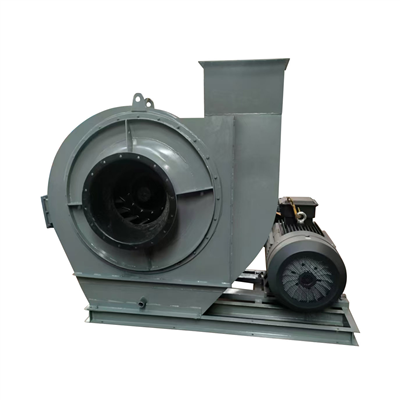
How to optimize the installation layout of a Mixed - flow Explosion - proof Fan in a large - scale ventilation system?
In large - scale industrial settings, ventilation systems play a crucial role in maintaining a safe and healthy working environment. Among the various types of fans used in these systems, the Mixed - flow Explosion - proof Fan stands out due to its unique characteristics and capabilities. As a supplier of Mixed - flow Explosion - proof Fans, I understand the importance of optimizing the installation layout to ensure the best performance of the ventilation system.
Understanding the Mixed - flow Explosion - proof Fan
Before delving into the installation layout optimization, it is essential to understand what a Mixed - flow Explosion - proof Fan is. A Mixed - flow fan combines the features of both axial and centrifugal fans. It has a higher pressure than an axial fan and a larger flow rate than a centrifugal fan. The explosion - proof feature is crucial in environments where there is a risk of explosive gases or dust. This type of fan is designed to prevent the ignition of these hazardous substances, ensuring the safety of the workplace. You can learn more about our Mixed - flow Explosion - proof Fan on our website.


Factors Affecting the Installation Layout
- Space Constraints: In large - scale ventilation systems, space is often a limiting factor. The layout of the fan must be designed to fit within the available space without compromising its performance. For example, in a narrow corridor or a confined room, the fan may need to be installed in a vertical or horizontal position depending on the space available.
- Airflow Requirements: Different areas in a large - scale facility may have different airflow requirements. For instance, areas with high heat generation or a large number of workers may need a higher volume of fresh air. The installation layout should be planned to ensure that the fan can deliver the required airflow to each area effectively.
- Safety Regulations: Safety is of utmost importance in any industrial setting. There are strict regulations regarding the installation of explosion - proof fans. These regulations cover aspects such as the distance from potential sources of ignition, the grounding of the fan, and the protection against electrical hazards. The installation layout must comply with these regulations to ensure the safety of the workers and the facility.
- Noise Considerations: Fans can generate a significant amount of noise, which can be a nuisance to the workers and may even cause hearing damage. The installation layout should be designed to minimize the noise impact. This can be achieved by placing the fan in a sound - insulated enclosure or by using noise - reducing materials.
Optimizing the Installation Layout
- Determine the Optimal Location: The first step in optimizing the installation layout is to determine the best location for the fan. This should be based on the airflow requirements and the space available. The fan should be placed in an area where it can draw in fresh air easily and distribute it evenly throughout the facility. For example, in a factory with multiple workstations, the fan can be installed near the ceiling to ensure that the fresh air is distributed evenly across the entire workspace.
- Consider the Ductwork: The ductwork is an essential part of the ventilation system. It is used to transport the air from the fan to the different areas of the facility. The layout of the ductwork should be designed to minimize the resistance to airflow. This can be achieved by using smooth - walled ducts and avoiding sharp bends and elbows. The ductwork should also be properly sized to ensure that it can handle the required airflow.
- Use Multiple Fans if Necessary: In some cases, a single fan may not be sufficient to meet the airflow requirements of a large - scale facility. In such situations, multiple fans can be used in parallel or series. When using multiple fans, it is important to ensure that they are properly coordinated to avoid any interference. For example, if two fans are installed in parallel, they should have the same pressure and flow rate characteristics.
- Install the Fan at the Right Height: The height at which the fan is installed can also affect its performance. In general, the fan should be installed at a height that allows it to draw in fresh air from the outside and distribute it effectively within the facility. For example, in a warehouse, the fan can be installed at a height of 3 - 5 meters above the ground to ensure that the fresh air is distributed evenly across the entire space.
Comparison with Other Types of Explosion - proof Fans
It is also important to compare the Mixed - flow Explosion - proof Fan with other types of explosion - proof fans, such as the Explosion Proof Axial Flow Fan and the Explosion Proof Centrifugal Fan. Axial flow fans are known for their high flow rate but relatively low pressure. They are suitable for applications where a large volume of air needs to be moved over a short distance. Centrifugal fans, on the other hand, can generate a higher pressure but have a lower flow rate. They are more suitable for applications where the air needs to be moved over a longer distance or against a higher resistance.
The Mixed - flow Explosion - proof Fan combines the advantages of both axial and centrifugal fans. It can provide a relatively high flow rate and a moderate pressure, making it suitable for a wide range of applications in large - scale ventilation systems.
Conclusion
Optimizing the installation layout of a Mixed - flow Explosion - proof Fan in a large - scale ventilation system is a complex process that requires careful consideration of various factors. By understanding the unique characteristics of the fan, the airflow requirements of the facility, and the safety regulations, it is possible to design an installation layout that ensures the best performance of the ventilation system.
If you are interested in purchasing a Mixed - flow Explosion - proof Fan or need more information about our products, please feel free to contact us for procurement discussions. We are committed to providing high - quality products and professional services to meet your ventilation needs.
References
- Industrial Ventilation Handbook, 3rd Edition
- Safety Standards for Explosion - proof Equipment in Industrial Settings