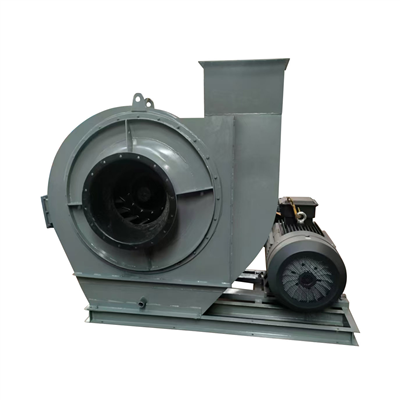
As a supplier of centrifugal corrosion-resistant fans, I've witnessed firsthand the crucial role that the right materials play in the performance and durability of these essential pieces of equipment. In this blog post, I'll explore the materials commonly used to make centrifugal corrosion-resistant fans, discussing their properties, advantages, and applications.
Fiberglass Reinforced Plastic (FRP)
Fiberglass Reinforced Plastic, or FRP, is one of the most popular materials for centrifugal corrosion-resistant fans. FRP is a composite material made of a polymer matrix reinforced with glass fibers. This combination results in a material that is lightweight, strong, and highly resistant to corrosion.
One of the key advantages of FRP is its excellent chemical resistance. It can withstand a wide range of corrosive chemicals, including acids, alkalis, and solvents. This makes it ideal for use in industries such as chemical processing, wastewater treatment, and pulp and paper, where exposure to corrosive substances is common.
FRP is also easy to fabricate and can be molded into complex shapes, allowing for the production of custom-designed fans to meet specific application requirements. Additionally, it has good thermal insulation properties, which can help to reduce energy consumption and improve the efficiency of the fan.
However, FRP does have some limitations. It is not as strong as some other materials, such as steel, and may not be suitable for applications where high mechanical strength is required. It is also more susceptible to damage from UV radiation and may require additional protection if used outdoors.
Polypropylene
Polypropylene is another commonly used material for centrifugal corrosion-resistant fans. It is a thermoplastic polymer that is known for its excellent chemical resistance, low cost, and ease of processing.
Polypropylene has a high resistance to a wide range of chemicals, including acids, alkalis, and salts. It is also lightweight and has good impact resistance, making it suitable for use in a variety of applications.
One of the advantages of polypropylene is its low cost. It is less expensive than many other materials, making it an attractive option for budget-conscious customers. It is also easy to fabricate and can be molded into a variety of shapes, allowing for the production of custom-designed fans.
However, polypropylene has some limitations. It has a relatively low melting point, which means that it may not be suitable for applications where high temperatures are involved. It also has a lower mechanical strength than some other materials, such as FRP and steel.
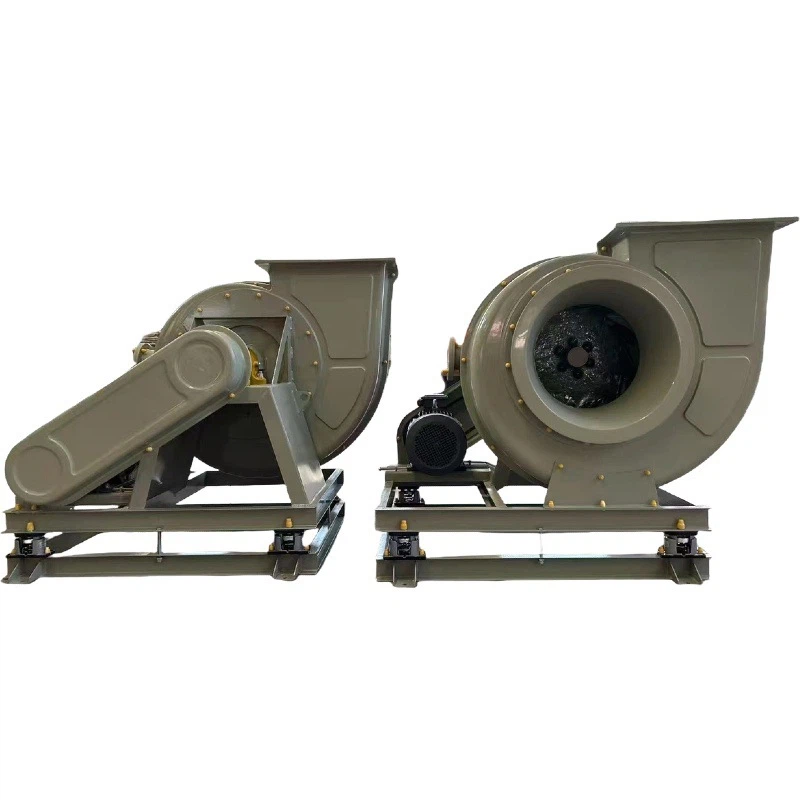

Stainless Steel
Stainless steel is a popular choice for centrifugal corrosion-resistant fans due to its high strength, durability, and resistance to corrosion. It is a metal alloy that contains chromium, which forms a protective oxide layer on the surface of the material, preventing corrosion.
Stainless steel has excellent mechanical properties, making it suitable for applications where high strength and durability are required. It is also resistant to a wide range of chemicals, including acids, alkalis, and salts.
One of the advantages of stainless steel is its long lifespan. It can withstand harsh environments and is less likely to corrode or degrade over time. It is also easy to clean and maintain, making it a popular choice for applications where hygiene is important.
However, stainless steel is more expensive than some other materials, such as FRP and polypropylene. It is also heavier, which may make it less suitable for applications where weight is a concern.
Carbon Steel with Corrosion-Resistant Coatings
Carbon steel is a widely used material for centrifugal fans, but it is not inherently corrosion-resistant. To make carbon steel fans corrosion-resistant, they are often coated with a protective layer of paint or other corrosion-resistant material.
The most common type of coating used for carbon steel fans is epoxy paint. Epoxy paint is a two-component coating that provides excellent adhesion and corrosion resistance. It can be applied to the surface of the fan using a variety of methods, including spraying, brushing, and dipping.
Another type of coating that is sometimes used for carbon steel fans is zinc coating. Zinc coating provides a sacrificial layer of protection, which means that it corrodes before the underlying steel. This helps to prevent corrosion of the steel and extends the lifespan of the fan.
Carbon steel with corrosion-resistant coatings is a cost-effective option for applications where corrosion resistance is required but the budget is limited. However, the coating may require regular maintenance and may not provide the same level of corrosion resistance as other materials, such as FRP and stainless steel.
Conclusion
In conclusion, there are several materials commonly used to make centrifugal corrosion-resistant fans, each with its own unique properties, advantages, and limitations. Fiberglass Reinforced Plastic (FRP) is a popular choice due to its excellent chemical resistance, lightweight, and ease of fabrication. Polypropylene is another option, offering good chemical resistance and low cost. Stainless steel is known for its high strength, durability, and resistance to corrosion, but it is more expensive. Carbon steel with corrosion-resistant coatings is a cost-effective option for applications where corrosion resistance is required but the budget is limited.
When choosing a material for a centrifugal corrosion-resistant fan, it is important to consider the specific application requirements, including the type of corrosive substances present, the operating temperature, and the mechanical strength required. By selecting the right material, you can ensure that your fan will provide reliable performance and long-term durability.
If you are interested in purchasing a centrifugal corrosion-resistant fan, please visit our website at Centrifugal Corrosion-resistant Fan to learn more about our products. We also offer Low-pressure Corrosion-resistant Fan and Medium Pressure Corrosion-resistant Fan options to meet your specific needs. Contact us today to discuss your requirements and get a quote.
References
- ASM Handbook, Volume 13A: Corrosion: Fundamentals, Testing, and Protection. ASM International, 2003.
- Corrosion Resistance of Plastics and Elastomers: A Practical Guide. William Andrew Publishing, 2004.
- Handbook of Corrosion Engineering. McGraw-Hill, 2006.