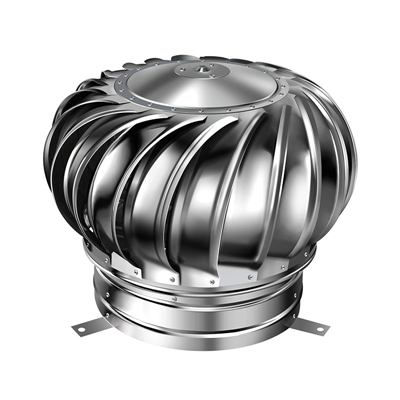
Hey there! As a supplier of corrosion-resistant blowers, I often get asked about the air volume of a typical corrosion-resistant blower. It's a crucial factor to consider when you're looking to buy one, so let's dive right in and break it down.
First off, what exactly is air volume? In simple terms, it's the amount of air that a blower can move in a given period. It's usually measured in cubic feet per minute (CFM) or cubic meters per hour (m³/h). The air volume of a corrosion-resistant blower can vary widely depending on a bunch of factors, like the type of blower, its size, and the specific application it's designed for.
Let's start by talking about the different types of corrosion-resistant blowers. There are mainly two types that are super common: axial flow anti-corrosion fans and centrifugal corrosion-resistant fans.
Axial flow anti-corrosion fans are designed to move air in a straight line, parallel to the axis of the fan. They're great for applications where you need a high volume of air at a relatively low pressure. These fans are often used in ventilation systems, cooling towers, and industrial exhausts. You can check out more about Axial Flow Anti-corrosion Fan on our website.
On the other hand, centrifugal corrosion-resistant fans work by using a spinning impeller to accelerate the air and then direct it outwards at a 90-degree angle to the fan's axis. They're better suited for applications that require a higher pressure to move air through ducts or other restricted spaces. You can find more details about Centrifugal Corrosion-resistant Fan on our site.
Another type of corrosion-resistant blower that's worth mentioning is the rubber-lined fan. These fans are lined with rubber to protect them from corrosive substances. They're commonly used in industries where there's a lot of chemical exposure, like the chemical processing industry, wastewater treatment plants, and the pulp and paper industry. If you're interested in learning more about Rubber-lined Fan, just click the link.
Now, let's get back to the air volume. The air volume of a typical corrosion-resistant blower can range from a few hundred CFM to tens of thousands of CFM. For small-scale applications, like a small laboratory or a local exhaust system, you might only need a blower with an air volume of around 500 - 1000 CFM. But for large industrial applications, like a big manufacturing plant or a power station, you could need a blower with an air volume of 10,000 CFM or more.
The size of the blower also plays a big role in determining the air volume. Generally, larger blowers can move more air than smaller ones. But it's not just about the physical size; the design of the blower, including the shape and size of the impeller, also affects the air volume. A well-designed impeller can increase the efficiency of the blower and allow it to move more air with less energy.
The specific application is another important factor. Different applications have different air volume requirements. For example, in a ventilation system, the air volume needs to be sufficient to replace the stale air with fresh air at a certain rate. In a dust collection system, the air volume needs to be high enough to capture and transport the dust particles.
When you're choosing a corrosion-resistant blower, it's essential to consider the air volume requirements of your specific application. You don't want to end up with a blower that's either too small or too large. If the blower is too small, it won't be able to meet the air volume requirements, and your system won't work effectively. On the other hand, if the blower is too large, it will consume more energy than necessary, which can lead to higher operating costs.
To determine the right air volume for your application, you can consult with an engineer or a professional in the field. They can help you calculate the air volume based on factors like the size of the space, the number of air changes per hour, and the type of contaminants you need to remove.
In addition to the air volume, there are other factors you should consider when choosing a corrosion-resistant blower. These include the pressure requirements, the material of the blower, the efficiency of the blower, and the noise level. The pressure requirements depend on the resistance of the system, such as the length and diameter of the ducts, and the presence of any filters or other components. The material of the blower is important because it needs to be able to withstand the corrosive environment. The efficiency of the blower affects the energy consumption, and the noise level is important if the blower is going to be installed in a noise-sensitive area.
At our company, we offer a wide range of corrosion-resistant blowers to meet different air volume and application requirements. Our blowers are made from high-quality materials and are designed to be durable and efficient. Whether you need a small blower for a laboratory or a large blower for an industrial plant, we've got you covered.


If you're interested in learning more about our corrosion-resistant blowers or have any questions about air volume or other aspects of blower selection, don't hesitate to reach out. We're here to help you find the right blower for your needs. Contact us today to start the conversation and let's work together to find the perfect solution for your application.
References:
- Engineering Handbook on Industrial Fans and Blowers
- Corrosion Prevention and Control in Industrial Equipment