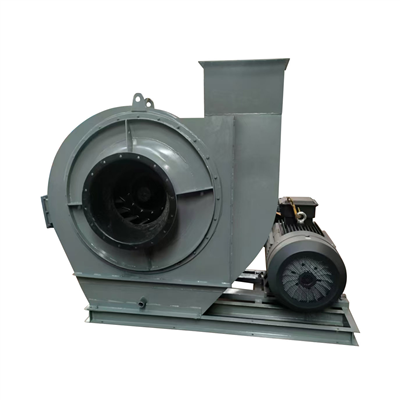
As a supplier of medium-pressure high-temperature fans, understanding how the performance of these fans changes with pressure is crucial for both our R & D team and our customers. In this blog post, I'll delve into the complex relationship between pressure and the performance of medium-pressure high-temperature fans, exploring various aspects such as airflow, efficiency, and power consumption.
Airflow and Pressure Relationship
The airflow of a medium-pressure high-temperature fan is one of the most important performance indicators. Generally speaking, as the pressure increases, the airflow of the fan will decrease. This relationship can be explained by the fan's characteristic curve. The fan characteristic curve shows the relationship between the pressure generated by the fan and the airflow. When the fan operates at a lower pressure, it can move a large amount of air, because the resistance the air encounters is relatively small at this time.
For example, in a high-temperature industrial environment, if the purpose is to quickly cool a certain area, a relatively low pressure may be selected to maximize the airflow and ensure effective heat transfer. However, when the air needs to be transported over a long distance through narrow ducts, the resistance will increase significantly, and the pressure must be increased. As a result, the airflow will gradually decrease. Our High Temp Duct Fan is designed to balance this relationship, providing an appropriate amount of airflow under different pressure conditions to meet the needs of different applications.
Efficiency Variation with Pressure
The efficiency of a medium-pressure high-temperature fan is also affected by the pressure. Efficiency is defined as the ratio of the useful power output of the fan to the power input. At a specific operating point, the fan operates at its highest efficiency. As the pressure moves away from this point, the efficiency will decrease.
In the initial stage of the pressure increase, the efficiency of the fan may gradually increase. This is because as the pressure rises, the fan can make better use of its mechanical energy to push the air through the system. However, once the pressure exceeds a certain critical value, the efficiency will start to decline. The complex flow patterns and internal losses within the fan become more pronounced at high pressures, leading to a waste of energy.
Our Centrifugal High Temperature Fan is engineered to maintain high efficiency over a wide range of pressures. By using advanced aerodynamic design and high - quality materials, we have optimized the fan's structure to minimize internal losses and improve energy conversion efficiency. Customers can select the appropriate operating pressure according to actual needs to ensure the economic operation of the system.
Power Consumption under Different Pressures
Power consumption is an important consideration for any industrial equipment, and medium-pressure high-temperature fans are no exception. As the pressure increases, the power consumption of the fan also increases. This is because more energy is required to overcome the increasing resistance.
The power required to drive the fan is proportional to the product of the airflow, pressure, and a coefficient related to the fan efficiency. When the pressure increases, if the airflow is maintained at a certain level or decreases slightly, the power consumption will increase significantly. This is because the pressure term in the power formula has a greater impact on power consumption. For example, in a high - temperature ventilation system, if the pressure is increased by adjusting the throttle valve or the duct system, the power consumption of the fan may increase exponentially.
To reduce power consumption, our Insertion High - pressure High - temperature Fan adopts a variable - speed control system. By adjusting the fan speed according to the actual pressure requirements, we can ensure that the fan always operates in an efficient state, reducing unnecessary power waste.
Impact on Mechanical Structure and Durability
The increase in pressure not only affects the performance parameters of the fan but also has a significant impact on its mechanical structure and durability. Higher pressure means greater forces acting on the fan blades, bearings, and other components. This can lead to increased wear and tear and even mechanical failure if the components are not properly designed or maintained.
The fan blades are the main components responsible for generating pressure and airflow. Under high - pressure conditions, the fan blades need to withstand greater bending and torsion forces. If the blade material is not strong enough or the design is unreasonable, the blades may deform or break. The bearings also need to withstand greater radial and axial loads, which will accelerate the wear of the bearings and reduce their service life.
At our company, we use high - strength materials and advanced manufacturing processes to ensure the reliability and durability of our fans under high - pressure conditions. We conduct strict material testing and mechanical performance analysis to ensure that each component can withstand the corresponding load and pressure.
Case Studies and Practical Applications
Let's take a look at some real - world examples to illustrate how the performance of medium - pressure high - temperature fans changes with pressure.
In a glass manufacturing plant, a high - temperature ventilation system is required to remove hot air and maintain a suitable working environment. Initially, the fan operated at a relatively low pressure, providing a large amount of airflow to quickly cool the glass annealing area. However, as the production process expanded, the ventilation ducts became longer and more complex, increasing the system resistance.
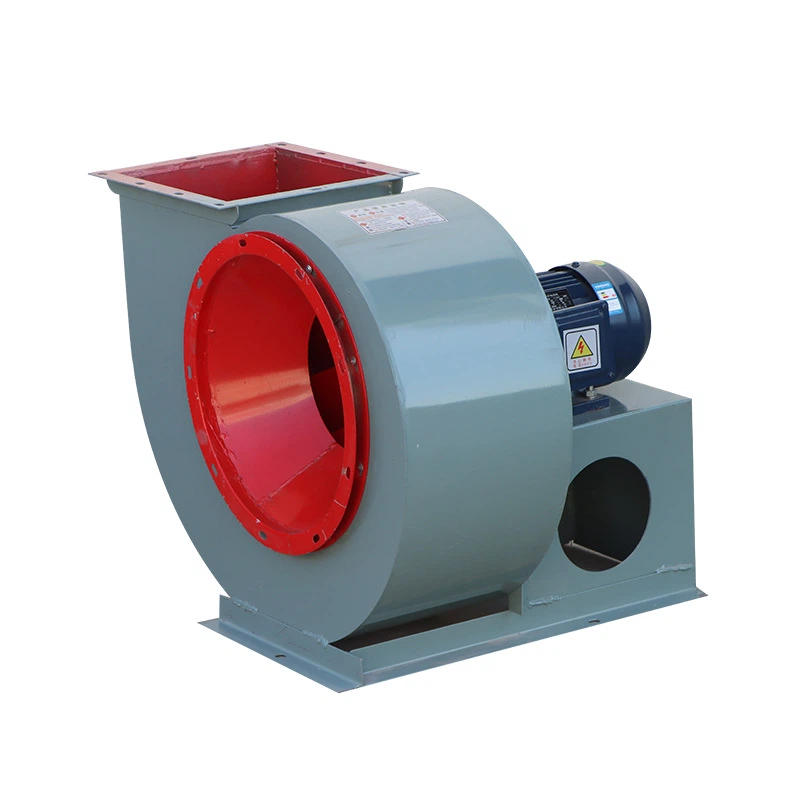

The pressure of the fan was then increased to ensure that the necessary airflow was still delivered to the required areas. As a result, the airflow decreased slightly, but the power consumption increased. By using our high - efficiency medium - pressure high - temperature fans and adjusting the fan speed through the variable - speed control system, the plant was able to maintain an appropriate balance between airflow, pressure, and power consumption, reducing operating costs while ensuring production efficiency.
Conclusion and Call to Action
In conclusion, the performance of medium - pressure high - temperature fans is closely related to pressure. Airflow, efficiency, power consumption, mechanical structure, and durability are all affected by changes in pressure. As a professional supplier of medium - pressure high - temperature fans, we understand these complex relationships and have designed and manufactured a series of high - performance fans to meet the diverse needs of our customers.
Whether you are in the field of metallurgy, chemical, or food processing, our fans can provide reliable ventilation and cooling solutions. If you are interested in our products or need more information about the performance of medium - pressure high - temperature fans under different pressures, please feel free to contact us for procurement discussions. Our technical team is ready to provide you with the best customized solutions.
References
- “Fan Engineering Handbook,” Buffalo Forge Company
- “Aerodynamics of Industrial Fans,” ASME Publications