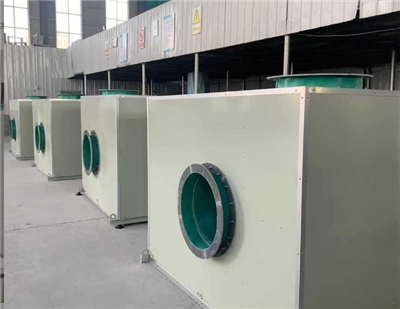
Hey there! As a supplier of Mixed-flow Explosion-proof Fans, I've been getting a lot of questions lately about how to improve the explosion-proof grade of these fans. So, I thought I'd share some insights and tips on this topic.
First off, let's understand what an explosion-proof fan is and why the explosion-proof grade matters. An explosion-proof fan is designed to operate safely in hazardous environments where there's a risk of explosive gases, vapors, or dust. The explosion-proof grade indicates the level of protection the fan provides against these potential hazards. A higher explosion-proof grade means better protection and a lower risk of ignition.
Understanding the Basics of Explosion-Proof Grades
Explosion-proof grades are determined by international standards and regulations. These standards take into account factors like the type of hazardous substances present, the temperature class, and the zone classification of the environment. For example, in the European Union, the ATEX directive sets the standards for explosion-proof equipment, while in the United States, the National Electrical Code (NEC) and the Underwriters Laboratories (UL) standards are used.
Factors Affecting the Explosion-Proof Grade
There are several factors that can affect the explosion-proof grade of a Mixed-flow Explosion-proof Fan. Let's take a look at some of the key ones:
1. Material Selection
The materials used in the construction of the fan play a crucial role in determining its explosion-proof grade. For example, the fan housing and impeller should be made of materials that are non-sparking and have good thermal conductivity. Aluminum and stainless steel are commonly used materials for explosion-proof fans because they are non-sparking and resistant to corrosion.
2. Design and Construction
The design and construction of the fan also impact its explosion-proof grade. The fan should be designed to prevent the entry of explosive gases or dust into the motor and other critical components. This can be achieved through features like sealed bearings, gaskets, and explosion-proof enclosures.
3. Motor Protection
The motor is one of the most critical components of an explosion-proof fan. It should be designed and rated to operate safely in hazardous environments. This includes using motors with explosion-proof enclosures, thermal protection, and proper grounding.
4. Sealing and Gasketing
Proper sealing and gasketing are essential to prevent the leakage of explosive gases or dust into the fan. The fan should be equipped with high-quality seals and gaskets that are resistant to chemicals and temperature variations.
Tips to Improve the Explosion-Proof Grade
Now that we understand the factors that affect the explosion-proof grade, let's look at some tips to improve it:
1. Upgrade the Materials
If your fan is currently made of materials that are not suitable for high explosion-proof grades, consider upgrading to more appropriate materials. For example, if the fan housing is made of plastic, you could replace it with aluminum or stainless steel.
2. Improve the Sealing
Check the seals and gaskets on your fan and replace them if they are worn or damaged. You can also consider adding additional seals or gaskets to improve the overall sealing performance.
3. Upgrade the Motor
If your fan's motor is not rated for the desired explosion-proof grade, consider upgrading it to a motor with a higher rating. This may involve replacing the motor or adding additional protection features.
4. Follow the Standards and Regulations
Make sure your fan complies with all the relevant standards and regulations for explosion-proof equipment. This includes conducting regular inspections and maintenance to ensure the fan is operating safely.
Comparing with Other Types of Explosion-Proof Fans
It's also worth comparing Mixed-flow Explosion-proof Fans with other types of explosion-proof fans, such as Explosion Proof Axial Flow Fan and Explosion Proof Centrifugal Fan. Each type of fan has its own advantages and disadvantages, and the choice depends on the specific requirements of the application.
Mixed-flow fans combine the features of axial and centrifugal fans, offering a good balance between airflow and pressure. They are suitable for applications where a moderate amount of airflow and pressure is required. Axial flow fans, on the other hand, are ideal for applications where high airflow is needed, while centrifugal fans are better suited for applications where high pressure is required.
Conclusion
Improving the explosion-proof grade of a Mixed-flow Explosion-proof Fan is essential for ensuring the safety of your operations in hazardous environments. By understanding the factors that affect the explosion-proof grade and following the tips mentioned above, you can enhance the performance and reliability of your fan.
If you're looking for a high-quality Mixed-flow Explosion-proof Fan, we're here to help. Our fans are designed and manufactured to meet the highest standards of quality and safety. We can also provide customized solutions to meet your specific requirements.
So, if you're interested in purchasing a Mixed-flow Explosion-proof Fan or have any questions about improving the explosion-proof grade, don't hesitate to get in touch with us. We'll be happy to assist you in finding the right solution for your needs.


References
- International Electrotechnical Commission (IEC) standards for explosion-proof equipment
- European ATEX directive
- United States National Electrical Code (NEC)
- Underwriters Laboratories (UL) standards