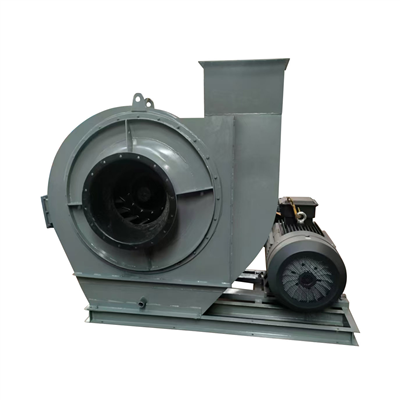
When it comes to industrial ventilation systems, mixed - flow high - temperature fans play a crucial role. These fans are designed to handle high - temperature environments and move large volumes of air efficiently. One of the key performance indicators of a mixed - flow high - temperature fan is its vibration level. In this blog, as a supplier of mixed - flow high - temperature fans, I will delve into what the vibration level of a mixed - flow high - temperature fan is, why it matters, and how it is measured and controlled.
Understanding Vibration in Mixed - Flow High - Temperature Fans
Vibration in a mixed - flow high - temperature fan refers to the mechanical oscillations that occur during its operation. These oscillations can be caused by various factors such as unbalanced rotating parts, misalignment of the fan shaft, loose components, or uneven airflow. When a fan vibrates, it can lead to several negative consequences. Excessive vibration can cause premature wear and tear on the fan's bearings, motor, and other components. It can also generate noise, which can be a nuisance in industrial settings and may even violate noise regulations. Moreover, high vibration levels can affect the overall performance and efficiency of the fan, leading to increased energy consumption and reduced airflow.
Why Vibration Level Matters
The vibration level of a mixed - flow high - temperature fan is a critical parameter for several reasons. Firstly, it is directly related to the reliability and durability of the fan. A fan with high vibration levels is more likely to experience mechanical failures, which can result in costly downtime for industrial operations. For example, if a bearing fails due to excessive vibration, it may require the fan to be shut down for repairs, leading to production losses.
Secondly, vibration can impact the safety of the operating environment. High - vibration fans can cause structural damage to the surrounding equipment and infrastructure. In extreme cases, it can even pose a risk to the personnel working in the vicinity. Therefore, maintaining an acceptable vibration level is essential for ensuring the safety and stability of the industrial ventilation system.
Measuring the Vibration Level
To measure the vibration level of a mixed - flow high - temperature fan, specialized equipment is used. One of the most common methods is to use vibration sensors, which are typically mounted on the fan's housing or motor. These sensors can detect the amplitude, frequency, and direction of the vibrations. The data collected by the sensors is then analyzed to determine the overall vibration level.
The vibration level is usually expressed in terms of displacement, velocity, or acceleration. Displacement refers to the distance that the vibrating part moves from its equilibrium position. Velocity is the rate of change of displacement, and acceleration is the rate of change of velocity. In the context of fan vibration, velocity is often the most relevant parameter as it provides a good indication of the energy associated with the vibration.
Acceptable Vibration Levels
The acceptable vibration level for a mixed - flow high - temperature fan depends on several factors, including the fan's size, speed, and application. In general, industrial standards provide guidelines for acceptable vibration levels. For example, the International Organization for Standardization (ISO) has established standards for machine vibration, which can be used as a reference for evaluating the vibration of fans.
Typically, for small - to medium - sized fans operating at relatively low speeds, the acceptable vibration velocity may be in the range of 2 - 4 mm/s. For larger fans or those operating at higher speeds, the acceptable vibration level may be slightly higher, but it should generally not exceed 7.1 mm/s. However, it is important to note that these are just general guidelines, and the specific requirements may vary depending on the application and the manufacturer's recommendations.


Controlling Vibration Levels
To ensure that the vibration level of a mixed - flow high - temperature fan remains within acceptable limits, several measures can be taken. One of the most effective ways is to ensure proper installation and alignment of the fan. During installation, the fan should be mounted on a stable base, and the shaft should be accurately aligned to prevent misalignment, which can cause excessive vibration.
Regular maintenance is also crucial for controlling vibration levels. This includes checking and tightening loose components, lubricating bearings, and inspecting the fan for any signs of wear or damage. Additionally, balancing the rotating parts of the fan can significantly reduce vibration. Balancing involves adding or removing weight from the fan's impeller to ensure that it rotates smoothly.
Related Fan Products
In addition to mixed - flow high - temperature fans, we also offer a range of other high - temperature fans, such as Volute High - pressure High - temperature Fan, Centrifugal High Temperature Fan, and Variable Frequency High Temperature Fan. These fans are designed to meet different industrial ventilation needs and can provide reliable performance in high - temperature environments.
Conclusion
The vibration level of a mixed - flow high - temperature fan is a critical factor that affects its performance, reliability, and safety. By understanding what causes vibration, how to measure it, and how to control it, industrial operators can ensure that their ventilation systems operate efficiently and effectively. As a supplier of mixed - flow high - temperature fans, we are committed to providing high - quality products with low vibration levels. If you are in need of a high - temperature fan for your industrial application, we invite you to contact us for more information and to discuss your specific requirements. Our team of experts will be happy to assist you in selecting the right fan for your needs and provide you with professional advice on installation, maintenance, and vibration control.
References
- ISO 10816 - 3:2009, Mechanical vibration — Evaluation of machine vibration by measurements on non - rotating parts — Part 3: Industrial machines with nominal power above 15 kW and nominal speeds between 120 r/min and 15 000 r/min when measured in situ.
- Fan Engineering, 7th Edition, by the American Society of Heating, Refrigerating and Air - Conditioning Engineers (ASHRAE).